Practice · 2026-09-05
When the tomatoes outran the twine
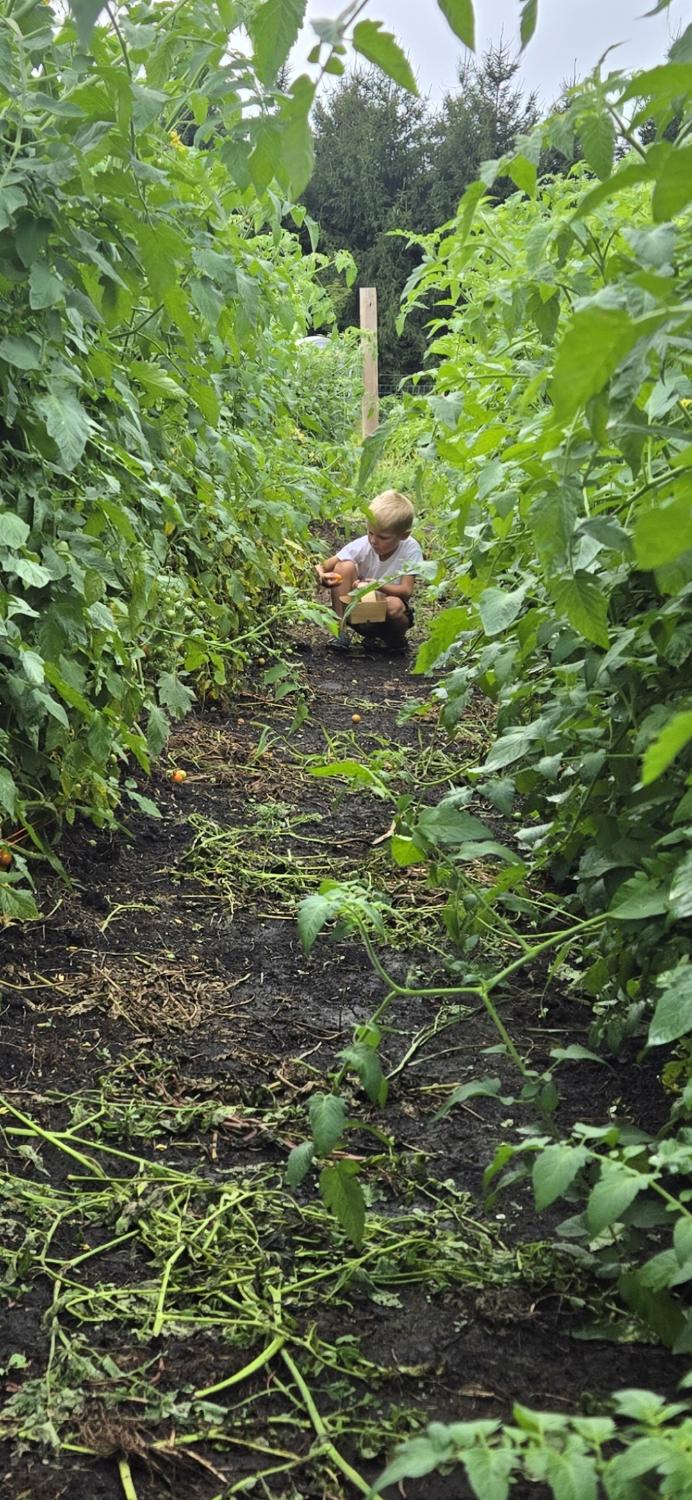
We were late with the weave on the first tomatoes. Nature kept her appointment. We missed ours. The bed is what that looks like.
We were late with the weave on the first tomatoes.
That is the whole story, and also not the whole story. The plants did what plants do in a Wisconsin June and July: they grew. Our calendar had other work on it. By the time the twine went in, the vines were already a hedge, and weaving a hedge is a little like trying to button a shirt after you have put on the coat. Stems kinked. Fruit that should have hung in the air was sitting in the dark at the base. A few plants gave up. A lot of them are only dying where we bent them — a soaked, jumbled core with fruit rotting in the middle of the plant.
Nature kept her appointment. We missed ours. The bed is what that looks like.
We still pick the good fruit. A homely plant can hold a perfect roma. Soft, leaking, or moldy tomatoes leave the row in a bucket. Dead plants come out, roots and all. The ones with a green top and a wrecked base get stripped at the bottom and left alone — no more wrestling them onto the string. The later waves, the ones we wove when they were still polite, are a different crop. We wash our hands before we walk those rows.
What we are looking at (so you can look too)
Not every yellow leaf is “blight,” and not every blight is the same thing. A lot of what is ugly in that first wave is just wound plus wet.
- Damage from late weaving. Broken or creased stems at the height where the twine finally went on. The top may still be green. The crown is a wet knot. Fruit trapped against the soil turns to mash. That is us, not a mystery spore.
- Early blight. Target-like brown spots on older leaves, often with a yellow halo, working up from the bottom as the plant ages and the canopy closes. Common here. It lives through winter in old vines if you leave a cold pile of them. It is not the same as a plant collapsing overnight.
- Septoria. Many small dark specks with tiny pale centers, mostly on lower leaves. Looks busy and speckled rather than like a bullseye. Also a debris disease.
- Late blight. The one we watch in a cool, wet stretch. Greasy, water-soaked patches that can run through a planting fast. In humid weather you may see a pale fuzz on the underside of the leaf. We have not treated this first-wave mess as late blight. If we ever do, those plants do not go back through the ordinary compost.
- Fruit rots on the ground. Anthracnose, soft rot, a tomato that sat in the wet — ugly, not a reason to fear the firm ones in the box.
If you grow a few tomatoes at home: open the canopy, pick up the fruit that fell, and do not keep bending a plant that already told you it was done. Firm fruit from a rough-looking vine is still food.
Where the mess goes
We run hot compost on purpose — the piles that climb to 140–160°F and get turned, then sit until they are dark and quiet. Ordinary tired vines and the rotten fruit can go in the center of a pile like that, mixed with plenty of dry carbon so it does not become a jar of tomato soup. Chip piles and the worm beds do not get tomato wreckage. Anything that looks like a true wilt from the ground up, or a late-blight year, goes to a woods pile that does not come back to the garden.
That is less drama than it sounds. Heat, time, and not spreading the slimy core down the row are most of the medicine.
What we are taking into next year
The 2027 tomatoes already have the sentence written on the plan: weave at transplant. The string goes in when the plant goes in. A catch of twine every foot or so after that, while the stem is still willing. We will not wait for a free afternoon in August.
Timing with nature is not a slogan on a seed packet. It is the week the vine is still a vine and not a thicket. We missed that week on the first wave. The plants kept the score. The later rows, and next summer’s block, get the lesson without the lecture.
Fruit is still coming in. If you stop at the stand, the ugly story stays in the field. What goes in the box is the part that waited for us.
— Dale’s Quails Acres