Practice · 2026-08-29
Why we read Brix
A refractometer is not a personality. It is a way to know if a plant is making sugar — and if the dirt is getting better, or just staying busy.
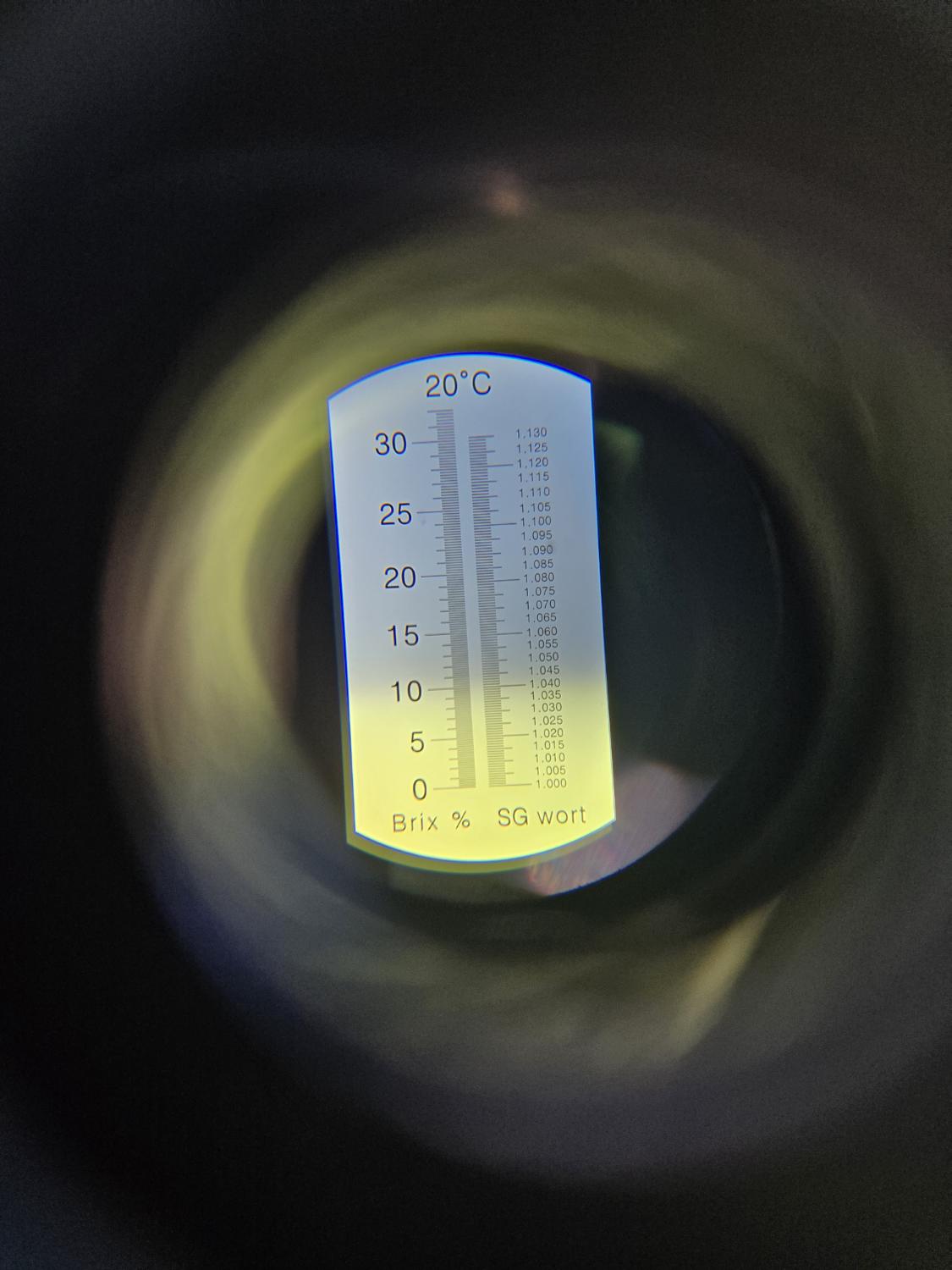
We take a drop of leaf sap, or the juice of the thing we eat, and put it on a refractometer. It gives us a number. That number is Brix — mostly sugars and other dissolved solids in the plant. Not a vibe. Not a label. A reading.
What it signals is whether the plant is actually being fed. A high reading usually means flavor, density, a crop that tastes like itself. A low one often means water and bulk with not much going on. Pests notice that too. A plant that is making sugar is a plant the soil biology is talking to. A plant that is not is running on empty, even if it still looks green from the road.
Yield alone can lie. You can fill a crate with fruit that does not earn its space. Brix is the other scoreboard: is this dirt growing food, or just growing weight? That is why we bother. Cover crops, compost as a biostimulant, rotation, animals on the grass — if none of that is moving the number over a season, we are performing a method, not healing soil.
One reading is a snapshot. A season of them is a story. We write them down so we can see whether we are giving more than we take, including from the ground under the crop. Progress needs a trail. Hope is not a trail.
We read in the morning, when the plant is still cool. Afternoon thirst will water the number down and tell you a story about weather, not about dirt. The harvest starts early for the same reason — turgor, flavor, a crop that still has something in it.
It is a pocket tool, not a lab. We are not chasing a perfect score. We are trying not to guess.