Practice · 2026-08-28
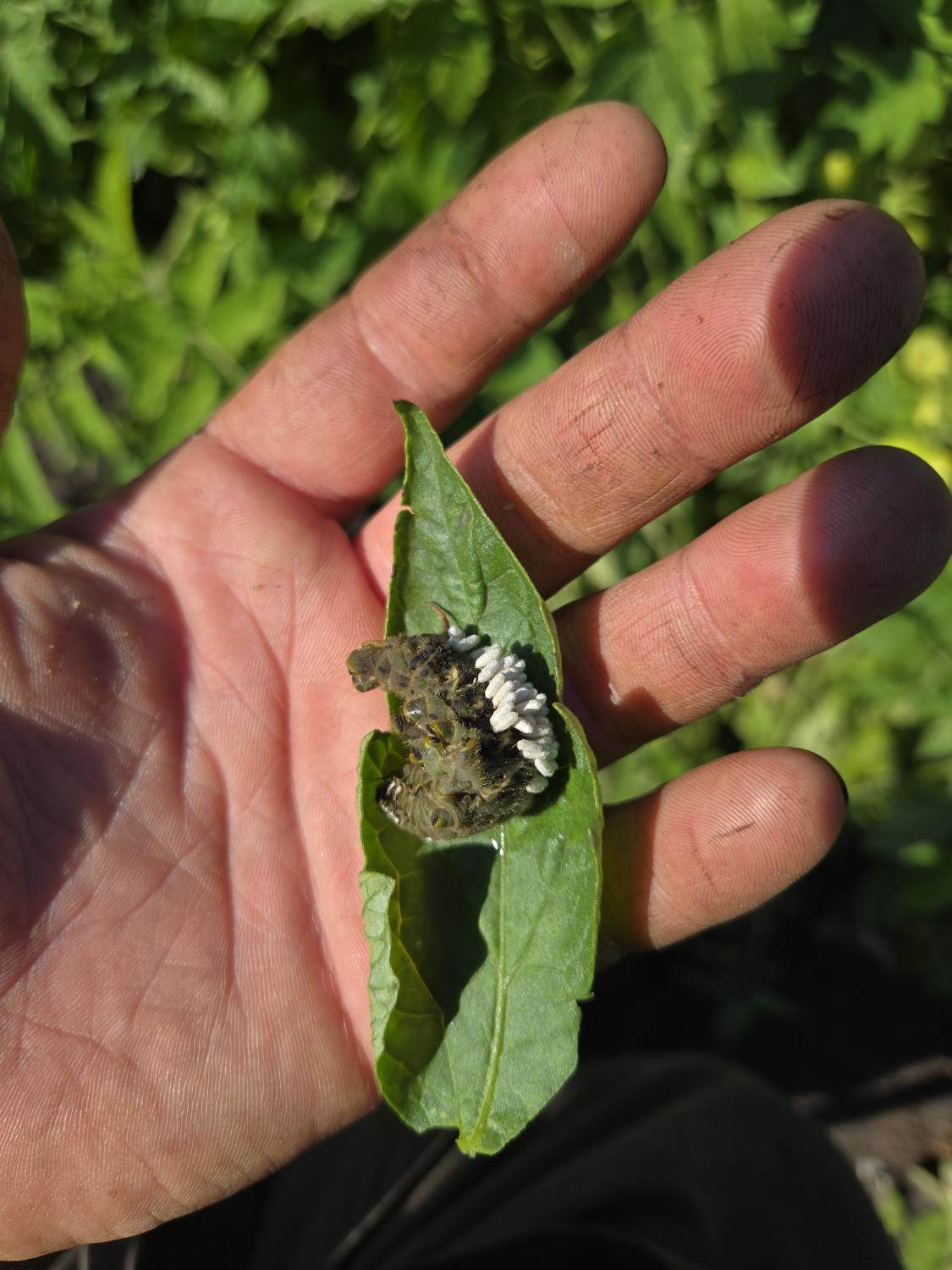
The white rice on the hornworms is a wasp. Leave it.
Those grains are cocoons, not eggs. The wasp is already on payroll. Leave that one. Pick the ones without rice.
This year's tomatoes got hornworms. Tomato and tobacco, both. Fat green caterpillars with an appetite. You find one on a stem and a plant can look stripped by afternoon.
Some of them were wearing a coat of small white grains, like dry rice stuck to their backs. Easy to panic and think the worm is laying eggs on itself. It is not.
Those are cocoons of Cotesia congregata, a braconid wasp. The wasp laid eggs inside the caterpillar days ago. The larvae ate the hornworm from the inside, then crawled out and pupated on its skin. That worm is finished. It will not eat another leaf. The wasps will hatch and go looking for the next one.
So we leave the rice. Hand-pick the clean ones — the unmarked worms that are still on the job. If we had sprayed, we would have killed the hornworms and the wasps that were already hunting them. We would have paid for a job biology was doing, and then we would have to keep paying.
Hornworms do not overwinter as eggs on the leaf. They drop, pupate in the soil, and come back from the ground. Next year we will be looking down as much as we look at foliage.
Working with nature instead of against it, on a day with worms, looks like this: walk the row, know the difference, accept some holes in the leaves. The tomatoes still came. The wasps were already on the farm. We just had to not get in the way.